

Art Prints vs. Canvas Art for Gaming and Workspace Decor
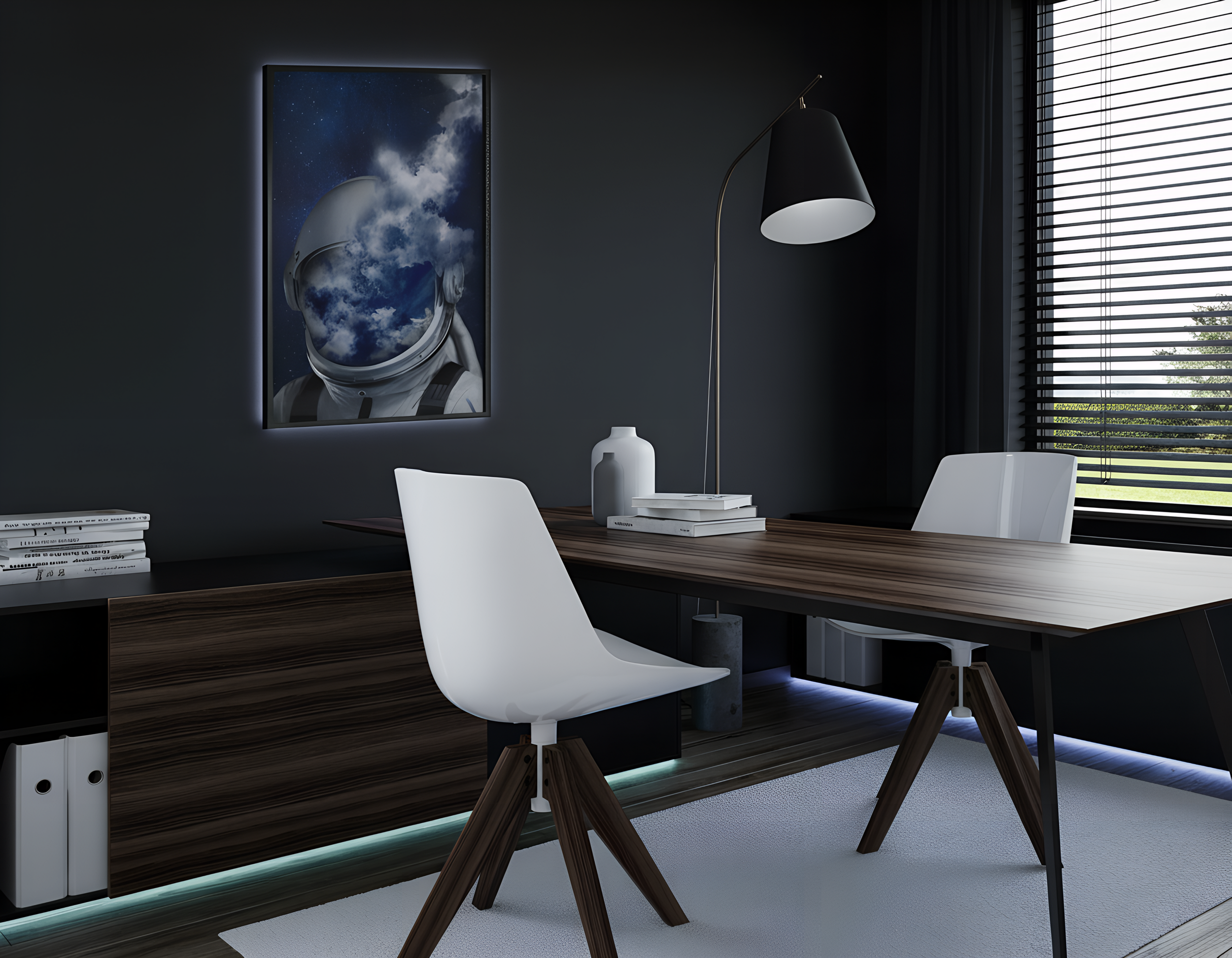
When building a dedicated gaming room or a home office, the focus usually goes straight to the hardware: the ultrawide monitors, the mechanical keyboards, and the RGB lighting zones. But what actually ties the space together and transforms it from a desk in a room into an immersive environment is the art on the walls.
If you are looking to bring Cyberpunk cityscapes, cosmic expanses, or nostalgic Heisei Retro vibes into your space, you'll eventually face the classic dilemma: Art Prints or Canvas?
Here is a breakdown of how each medium interacts with modern tech setups.
The Case for Art Prints
Art prints are high-resolution reproductions printed on premium paper. For digital-first aesthetics, they often hold a distinct advantage.
Razor-Sharp Details: Styles like Synthwave and Cyberpunk rely heavily on crisp lines, neon grids, and dense metropolitan details. Premium paper prints maintain the exact sharpness of the original digital file, ensuring that fine visual elements don't get lost in a textured weave.
Framing Versatility: A framed print behind glass or acrylic reflects the environment. While you have to be mindful of placing them directly opposite a window, in a room with controlled Chroma RGB or LED light bars, a framed print catches the ambient glow beautifully, adding a sleek, modern finish.
Swappable: If you like to rotate your aesthetics—maybe shifting from a high-energy Vaporwave theme in the summer to a moody, deep-space cosmic theme in the winter—prints are much easier to swap out of standard frames than bulky canvases.
The Case for Canvas Art
Canvas art is printed on a woven fabric and stretched over a wooden frame. It brings a more traditional gallery feel to a room.
Zero Glare: Because canvas is inherently matte and lacks a glass cover, it absorbs light rather than reflecting it. If your workspace has heavy, direct sunlight or your screen glare is already hard to manage, a canvas won't add any unwanted reflections.
Textured Depth: The woven texture of canvas adds physical depth to an image. This works incredibly well for abstract landscapes or painterly styles, though it can slightly soften the hyper-crisp edges of digital UI elements or retro-tech graphics.
Substantial Presence: A thick gallery-wrapped canvas pops off the wall, creating a bold, frameless focal point that feels substantial without the added weight of glass and metal.
Making the Right Choice for Your Setup
The right choice comes down to the specific aesthetic you are trying to build:
Go with Art Prints if...
You are building a high-tech, futuristic, or retro-digital space. The sleekness of a framed print perfectly complements the hard edges of monitors, tempered glass PC cases, and mechanical keyboards. The sharpness of the paper is essential for the neon typography and precise geometry found in modern digital art.
Go with Canvas if...
You want a softer, more organic feel to balance out the technology in the room. Canvas works exceptionally well if you are aiming for a minimalist, cozy workspace where the art acts as a textural element rather than a sharp digital extension of your screens.
The Kiyo Arts Verdict
At Kiyo Arts, we believe that your walls should be as immersive as the games you play and the projects you build. While canvas has its place, high-quality art prints are the superior choice for capturing the luminous colors, sharp contrasts, and intricate details of digital, synth-heavy, and cosmic artwork. Paired with a sleek frame, an art print doesn't just decorate a workspace—it acts as a portal to another world.